Series
Becoming Part of the Family: Greenwashing, Animal Agriculture, and the Strategic Control of Climate Research
Jul 20, 2026
9:00 - 10:30 AM PDT
Watch the Replay
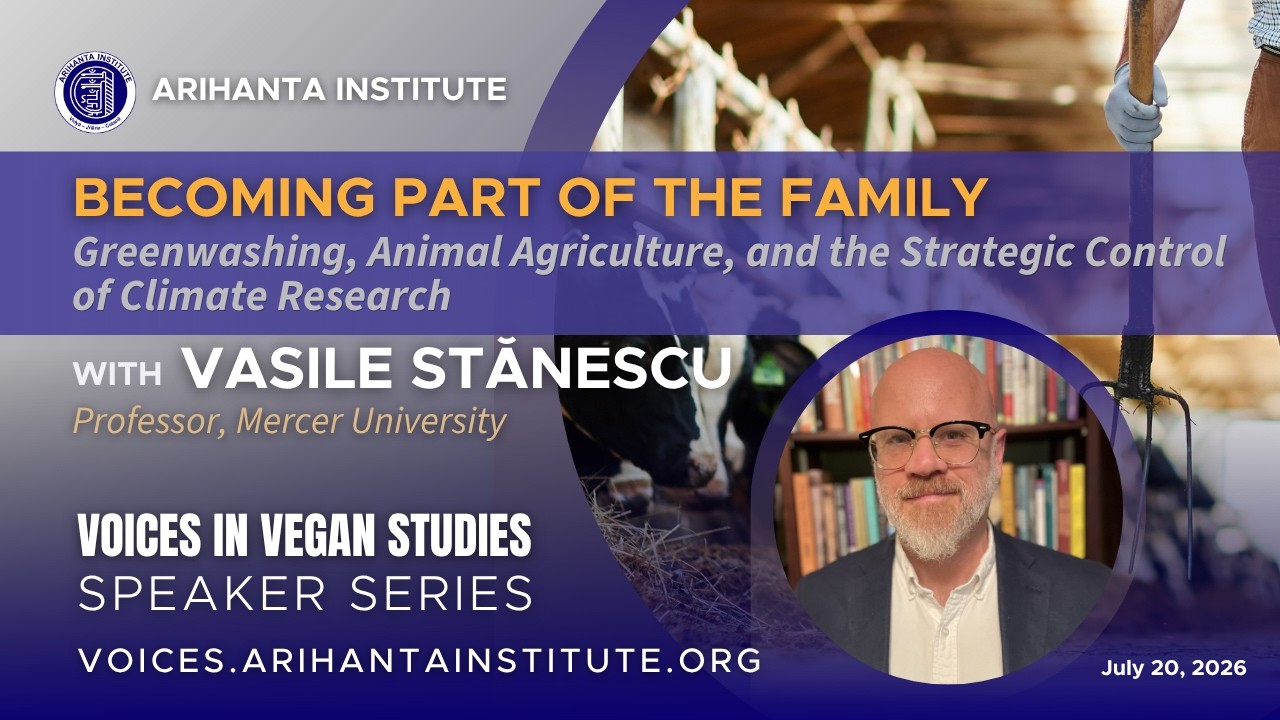
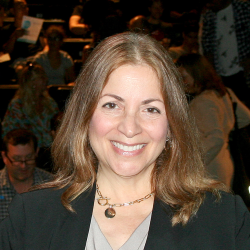
Presenter: Vasile Stănescu, Associate Professor, Mercer University
Vasile Stănescu is an Associate Professor in the Department of Communication at Mercer University in the United States. He holds a PhD in Modern Thought and Literature from Stanford University, where he focused on environmental rhetoric.
His work examines animal studies, food studies, media studies, and environmental communication, with particular attention to the intersections of consumer culture, capitalism, and animal liberation. He has conducted research on locavorism, “humane” meat, lab-grown meat, and the ethics of invasive-species removal. His current work explores greenwashing strategies in animal agriculture and their relationship to climate change discourse. His scholarship has been cited in The Guardian, Vox, The New York Times, and Bloomberg News.
Dr. Stănescu is the co-founder of the North American Association for Critical Animal Studies (NAACAS) and a Fellow of the European Association for Critical Animal Studies (EACAS). He previously served as co-senior editor of the Critical Animal Studies book series published by Brill/Rodopi. His work has received support from the Woods Institute for the Environment, the Andrew Mellon Foundation, the Culture and Animals Foundation, the Institutul Cultural Român, and the Climate and Social Science Network at Brown University, where he is a research fellow.
Becoming Part of the Family: Greenwashing, Animal Agriculture, and the Strategic Control of Climate Research
This talk examines how the animal agriculture industry strategically captures academic research to reshape public understanding of its climate impacts. It focuses on three case studies: first, Dr. Frank Mitloehner's selective reframing of credible science to manufacture doubt about livestock's climate impacts, transforming what the UN calls an urgent environmental threat into a public relations problem; second, the Canadian Beef Cattle Research Council's pairing of early-career researchers with feedlot operators and industry consultants as mentors; and third, the direct hiring of endowed chairs exclusively funded by animal agriculture who are contractually required to report back to industry for 25 percent of their time and who then make public-facing statements that animal agriculture is sustainable—indeed, net beneficial for climate change. Overall, this talk demonstrates how industry doesn't need to dictate findings; instead, it shapes which questions get asked, which researchers advance, and ultimately which scholars become "part of the family." The findings carry urgent implications for animals, climate action, research independence, and academic ethics.