Series
Blessed Beasts and Sacred Spaces: A Theologico-Political Exploration of Animal Sanctuaries
Jun 15, 2026
9:00 - 10:30 AM PDT
Watch the Replay

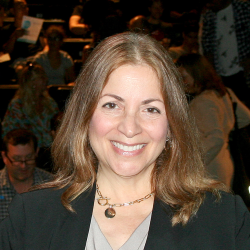
Presenter: Zipporah Weisberg, Adjunct Professor, University of Ottawa

Zipporah Weisberg is an adjunct professor in the Department of Classics and Religious Studies at the University of Ottawa. From 2023-2024, Zipporah held a one-year limitedterm appointment at the rank of Assistant Professor of Critical Animal Studies in the Department of Sociology at Brock University. In March 2021, Zipporah was awarded a Culture and Animals Foundation grant for her project on animal agency in animal sanctuaries. Zipporah completed her PhD in Social and Political Thought at York University in 2013, and was the inaugural Postdoctoral Fellow in Animal Ethics in the Department of Philosophy at Queen’s University from 2013-2015. Her areas of specialization include critical animal studies, the critical theory of the early Frankfurt School, and existentialism and phenomenology. Zipporah has published on a wide range of topics, including animal sanctuaries as forms of political refusal, climate justice and animal justice, the ethics and politics of cultured meat, the benefits and harms of animal assisted therapy, the ethical and ontological implications of biotechnology, and the psychopathology of speciesism. She is currently working on a book project on sanctuaries as a form of political refusal.
Blessed Beasts and Sacred Spaces: A Theologico-Political Exploration of Animal Sanctuaries
In this talk, I will explore animal sanctuaries through a theologico-political lens. The Latin root of the term ‘sacred’ or ‘sacer’ refers to that which ‘sets apart’, ‘consecrates’, or ‘makes holy.’ Animal sanctuaries—which are among the only places on earth in which persecuted animals are protected from systemic cruelty and offered a chance to live their lives in peace, comfort, and community— ‘consecrate’ animals by recognizing their intrinsic value irrespective of species, capability, or usefulness. Sanctuaries are themselves ‘set apart’ from the dominant ideology and system of violence and are, in this sense, ‘holy’ places. They engage in ‘soft’ resistance by refusing to participate in the wider culture’s routinized desecration of animal life in factory farms, laboratories, zoos, circuses, fur farms, and other houses of horror. Sanctuaries are not only sacred spaces, but also 'holy' sites, that is places where animals are made and make themselves hāl or whole again. In animal sanctuaries each animal is 'blessed,' not because they are marked with ''the blood of the sacrifice,' but because they are finally cleansed of such a mark.